What’s the origin of the phrase ‘A miss is as good as a mile’?
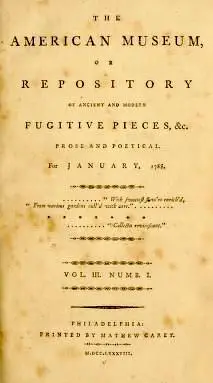
This proverbial saying dates from the 18th century. The first example of it that I can find in print is from the USA, in the journal The American Museum, Volume 3, 1788:
A smart repartee… will carry you through with eclat such as, ‘a miss is as good as a mile’.
The expression may or may not be American in origin, but the root source is certainly the British Isles. Similar expressions were in circulation there more than a century earlier; for example, this piece from William Camden’s Remaines of a Greater Worke Concerning Britaine, 1605:
An ynche in a misse is as good as an ell.
[An ell is a now obsolete English measure of length, equalling about 45 inches.]
Camden’s version is clearly essentially the same phrase as ‘a miss is as good as a mile’, the dimensions being those of the early 17th century. The expression was also considered proverbial in Scotland by the 18th century, where James Kelly included it in A Complete Collection of Scotish Proverbs, 1721:
An Inch of a miss is as good as a span.
Kelly wrote ‘span’ as ‘spaw’, but it is clear what he meant - a span is the distance from the tip of the thumb to the tip of the little finger of a man’s hand, usually formalised as 9 inches.
Perhaps more recent changes in dimensions will lead us to ‘a miss is as good as a kilometre’. Until then, we will have to make do with the American ‘close but no cigar’.