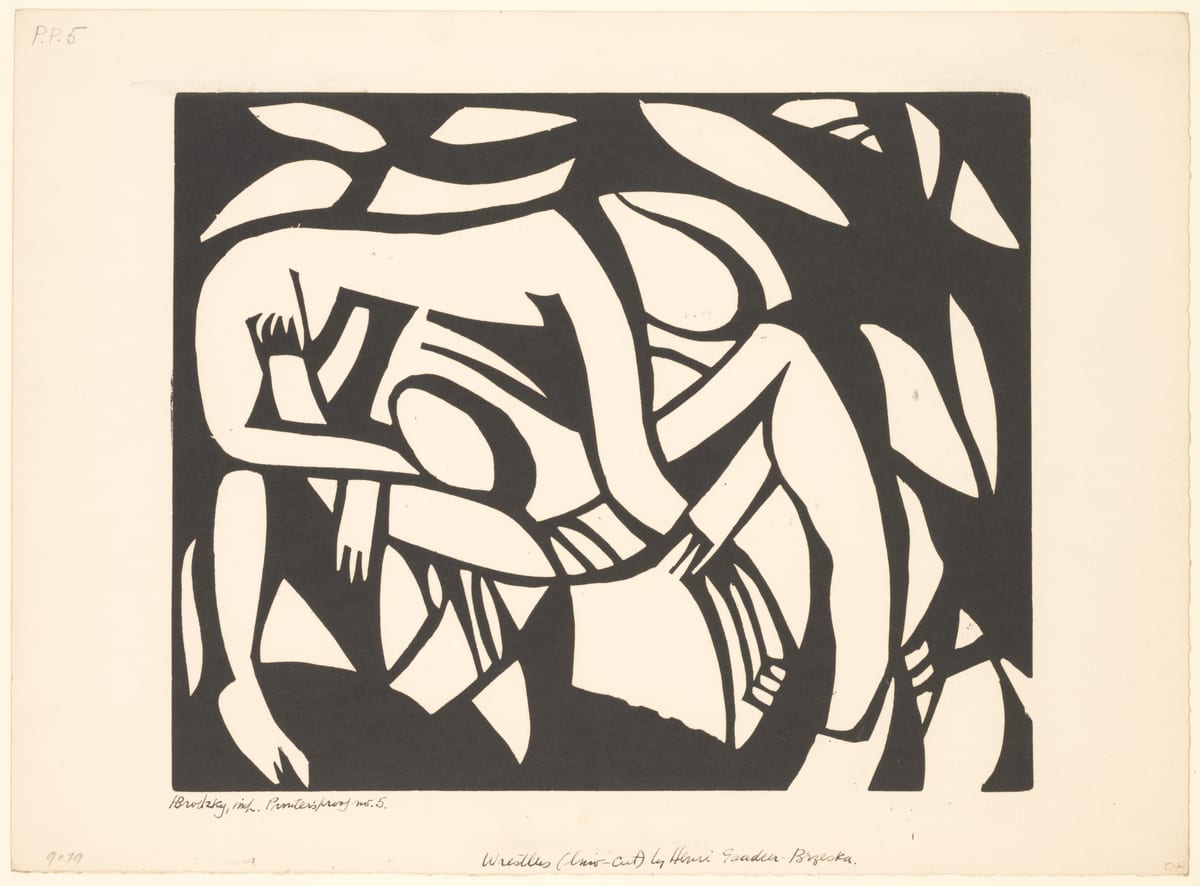
No holds barred means without any limits, rules or restraint: a no holds barred debate or attack is one where anything goes. The phrase comes from American professional wrestling in the late 19th century, where matches were billed by which holds were banned, and a bout with no holds barred allowed every grip, including the dangerous stranglehold.
What’s the origin of the phrase ‘No holds barred’?
The holds here are wrestling holds and that’s where the phrase originates. Wrestling has long been an Olympic sport, administrated by FILA, the sport’s governing body. There are sets of rules for each of the various styles of wrestling. Prior to the formation of rules, wrestling was a free-form affair.
There was no need to mention any such phrase as no holds barred, as that was taken for granted. It wasn’t until after the sport became regulated that bouts where those rules didn’t apply were billed as such.
The earliest reference I can find to no holds barred is from Manitoba Daily Free Press, February 1892:
“Wm. Gibbs, the Kansas man, and Dennis Gallacher, of Buffalo, engaged in a wrestling match at the opera house here tonight. Gibbs was strangled into insensibility and may die. The conditions of the match were best two in three falls Greco-Roman style; no holds barred.”
The strangling in that report is the point. In the catch-as-catch-can wrestling of the time a match was described by what it barred, and the stranglehold is the hold the sources below single out. Wrestling Heritage, in Ruslan C. Pashayev’s history of the rules, gives typical North American conditions of the early 1900s ending “Pinfalls only to govern. Strangle hold only barred.” A match with no holds barred dropped even that restriction.
Mark S. Hewitt’s history of 19th-century catch-as-catch-can on the Scientific Wrestling site describes the same arrangement a few years before the Manitoba report. In his account, Evan ‘Strangler’ Lewis challenged Jack Carkeek in 1886, and “Lewis wanted to wrestle catch-as-catch-can, no holds barred”, while Carkeek wanted the stranglehold disallowed; Carkeek then offered to wrestle in a private room with “no referee, no restrictions, no rules, and the first man that cries ‘enough’ loses the pot.” Hewitt also records a private contest in Albany, New York, on 28 November 1899 between Mike Dwyer and Karl Johnson, where “The rules were catch-as-catch-can, no holds barred.” Hewitt’s wording is his own summary of the period reports, so the 1886 date shows the practice rather than the exact phrase in print.
The Cambridge Dictionary now gives the figurative sense as “without limits or controls”, with the example “This is comedy with no holds barred”. It shares that spirit with ‘all’s fair in love and war’.
Forms of contemporary no holds barred wrestling in which rules are thrown out the window are Hardcore Wrestling and Cage Fighting.
Hulk Hogan starred in a 1989 film based on free-form wrestling - ‘No Holds Barred’. Its tagline was “No Ring. No Ref. No Rules.”