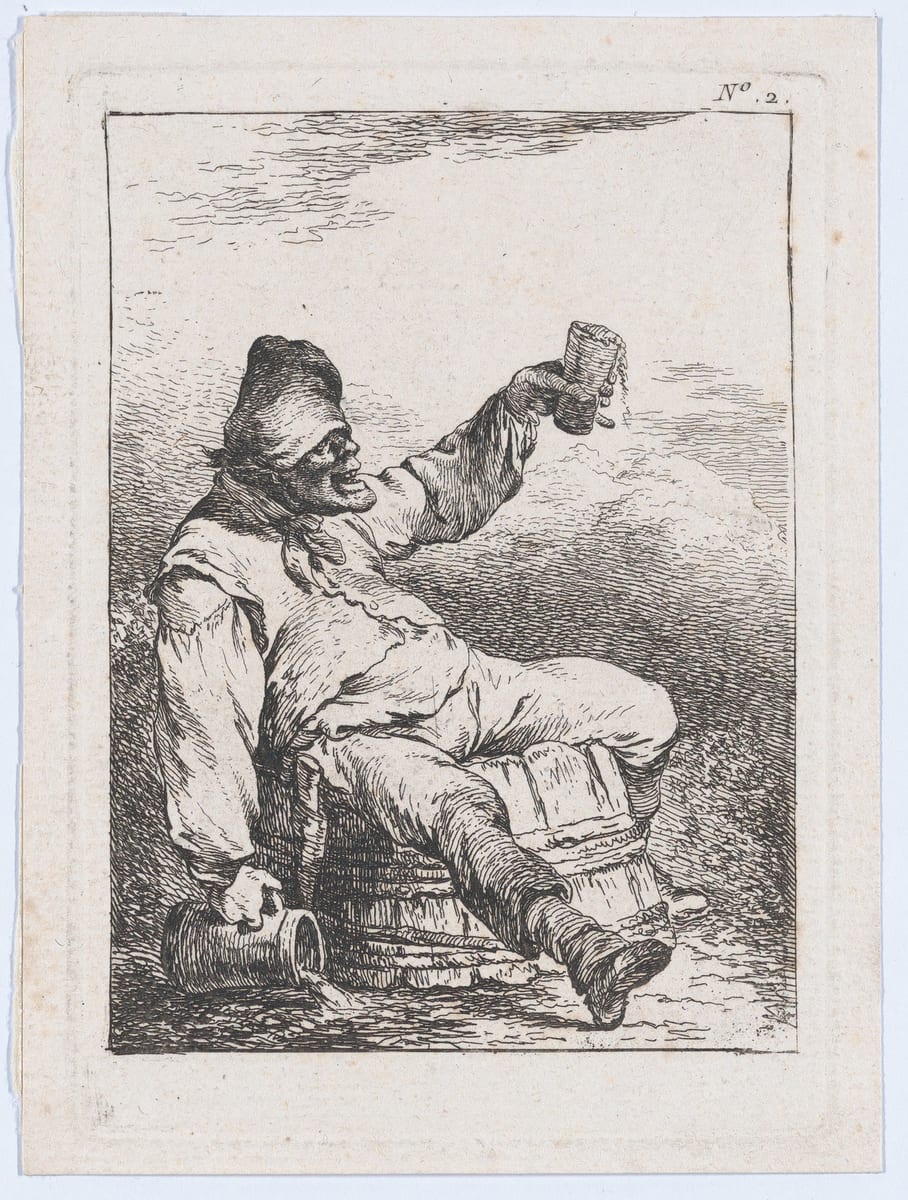
An old soak is a habitual heavy drinker, and almost always one of long standing: the regular propping up the end of the bar who has been propping it up for decades. The phrase is informal and, in Britain especially, more indulgent than accusing. Calling someone a drunkard is a judgement; calling them an old soak is closer to a shrug, and the Longman Dictionary of Contemporary English labels the expression humorous. It is the sort of thing said of an uncle at a wedding rather than written in a doctor’s notes.
What’s the origin of the phrase ‘old soak’?
The image is plain enough. A thing left to soak sits in liquid until it can absorb no more, and a human soak has spent years doing much the same with beer or spirits. The drinking sense of the verb is old: etymologists record ‘soak’ meaning to drink immoderately by the 1680s, and an adjective ‘soaken’, meaning intoxicated, from the 1650s. The noun ‘soaker’ is older still, found by the 1580s, though at that date it meant a veteran or old hand at any pursuit, and how far that early use is connected to the drinking sense is unclear. What is clear is that ‘soaker’ and later ‘soak’ settled down as words for a drunkard, and Green’s Dictionary of Slang notes that the noun soak in this sense usually travels with ‘old’ attached. The ‘old’ does the softening: like ‘old devil’ or ‘old rogue’, it converts a vice into something nearer a character trait.
The phrase’s high-water mark came in Prohibition-era America, courtesy of the humorist Don Marquis, best remembered now for archy and mehitabel. Marquis built a running character called the Old Soak, a genial, Scripture-mangling drinker called Clem Hawley who grumbled eloquently against the dry laws. A collection, The Old Soak and Hail and Farewell, was published in 1921, and Marquis’s stage version of The Old Soak opened on Broadway in 1922 and ran as a hit through the 1922-23 season. Hollywood followed twice: a 1926 Universal silent with Jean Hersholt as Hawley, now believed lost, and a 1937 talkie remake, The Good Old Soak, starring Wallace Beery. For a decade or so the Old Soak was a national in-joke, the amiable face of resistance to the on the wagon tendency.
Marquis’s character faded with Prohibition itself, but the phrase never needed him in Britain, where it survives comfortably as everyday colloquial English. It remains the gentlest term available for a lifelong drinker: an old soak is rarely three sheets to the wind in any dramatic way, just quietly, dependably soaked.