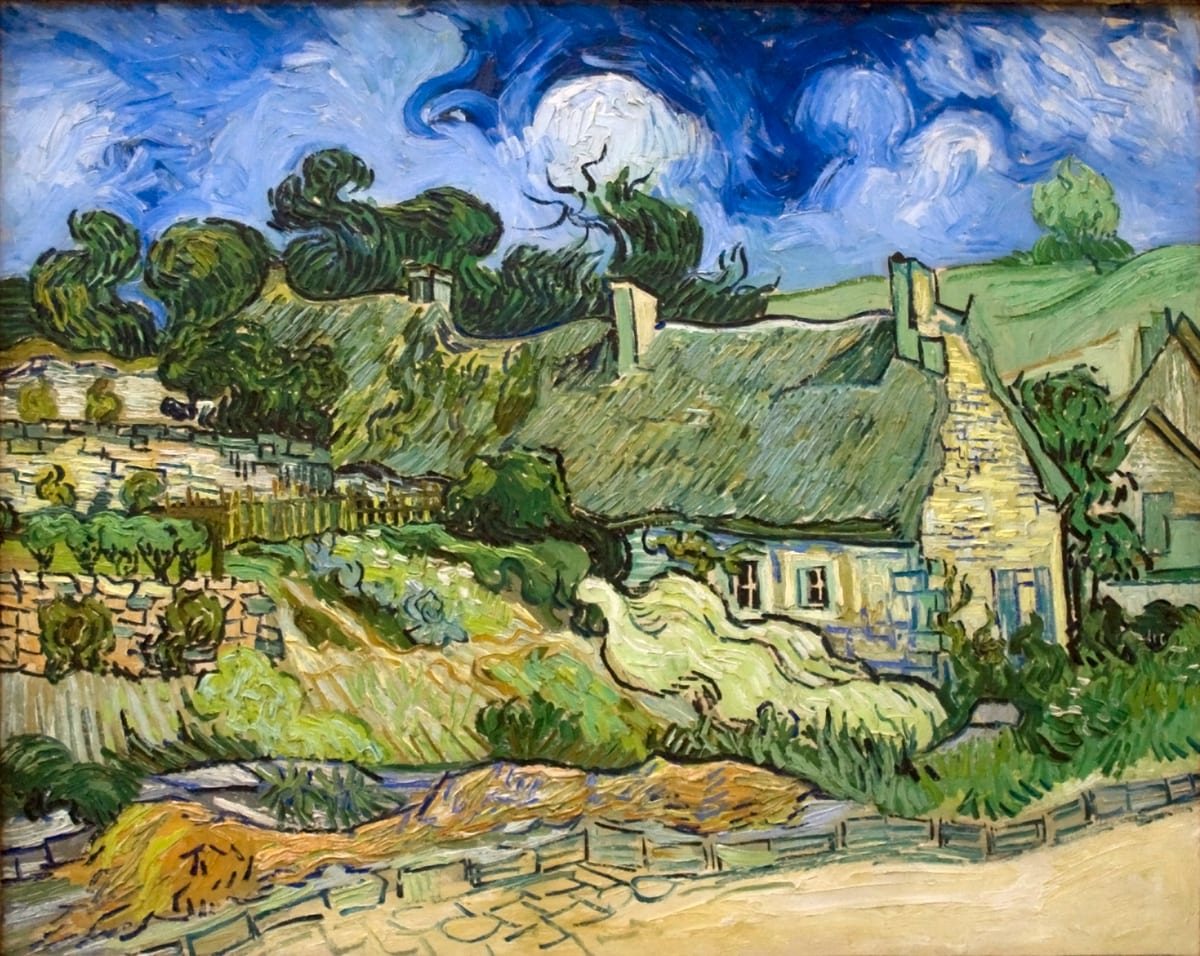
“My humble abode” is what people say while opening the front door, and almost nobody says it straight. “Welcome to my humble abode” is a piece of mock ceremony, a deliberately overblown, old-fashioned courtesy that works whether the home in question is a mansion or a bedsit. The joke runs both ways: false modesty about a house the speaker is clearly proud of, or wry apology for a flat full of unwashed mugs. The Farlex Dictionary of Idioms defines it simply as “one’s home”, with “Welcome to our humble abode!” as the standard line.
What’s the origin of the phrase ‘my humble abode’?
Take the noun first. ‘Abode’ comes from the verb ‘abide’, and its earliest sense, in the thirteenth century, was the act of waiting or staying. The Online Etymology Dictionary dates the meaning ‘habitual residence’ to the 1570s. By the eighteenth century it was a formal, slightly literary word for a home, exactly the sort of word a person reaches for when being elaborately polite.
The pairing with ‘humble’ arrives in print around 1760, which is where Google’s Ngram corpus first picks the phrase up. Its early home was the sentimental fiction of that decade, where it described the cottages of the virtuous poor, in the third person and entirely sincerely. In Charlotte Lennox’s novel Sophia (1762), the heroine’s grand sister sweeps into the cottage where Sophia sits at her embroidery, “that humble abode of innocence and industry”. A year later, Frances Brooke’s The History of Lady Julia Mandeville (1763) has plenty smiling “on their humble abodes” of a good landlord’s tenants. By the last decades of the century the possessive forms, ‘our humble abode’ and ‘his humble abode’, were turning up too, and the phrase had become part of the standard furniture of polite self-deprecation.
It was Jane Austen who caught what was wrong with it. In Pride and Prejudice (1813), “my humble abode” is the property of Mr Collins, the fawning clergyman whose modesty is really a boast about his patroness. “The garden in which stands my humble abode is separated only by a lane from Rosings Park, her Ladyship’s residence,” he tells Mrs Bennet, adding that Lady Catherine’s daughter “often condescends to drive by my humble abode in her little phaeton and ponies”. Austen’s narrator twists the knife when Elizabeth visits Hunsford and Collins welcomes her “with ostentatious formality, to his humble abode”, and he is still at it on her departure: “We know how little there is to tempt anyone to our humble abode.” The phrase appears five times in Pride and Prejudice and not once in Austen’s five other novels. It is Collins’s line, and she uses it to show that ostentatious humility is just ostentation.
‘Humble abode’ had its heyday in Victorian print, peaking in the 1840s by the Ngram corpus’s count, then slowly fell away as sincere usage died. What survived is the Collins register. Steven D. Price’s Endangered Phrases (2011) defines it as “a self-deprecating way to refer to one’s home” and points straight back to Pride and Prejudice. In fact the corpus shows ‘my humble abode’ more frequent in twenty-first-century print than at any earlier point: the phrase now exists almost entirely to be said with a raised eyebrow, which means Austen’s joke has become its job description. The unironic English feeling about home lives in a different phrase altogether: an Englishman’s home is his castle.