The Ivy League is the collective name for eight long-established universities in the north-eastern United States: Brown, Columbia, Cornell, Dartmouth, Harvard, Pennsylvania, Princeton and Yale. Strictly speaking it is an athletic conference, but hardly anyone uses it that way. In everyday speech it stands for academic prestige and social polish, and an ‘ivy leaguer’ is a graduate of one of the eight, usually pictured as well-connected and expensively educated. The adjective has spread well beyond the campuses, attaching itself to clothes, accents and attitudes thought typical of that upper-crust world.
What’s the origin of the phrase ‘Ivy League’?
The name comes from the ivy-covered walls of the universities’ older buildings, which had long been shorthand for venerable academia; American writers were describing college walls as ‘ivied’ by the late nineteenth century. The ‘league’ half of the phrase came from the sports pages.
The usual starting point is the sportswriter Stanley Woodward, who wrote in the New York Herald Tribune of 14th October 1933: “A proportion of our eastern ivy colleges are meeting little fellows another Saturday before plunging into the strife and the turmoil.” That gives us ‘ivy colleges’ but not yet a league. The earliest known appearance of ‘Ivy League’ itself is from February 1935, when The Christian Science Monitor referred to “The so-called ‘Ivy League’ which is in the process of formation among a group of the older eastern universities.”
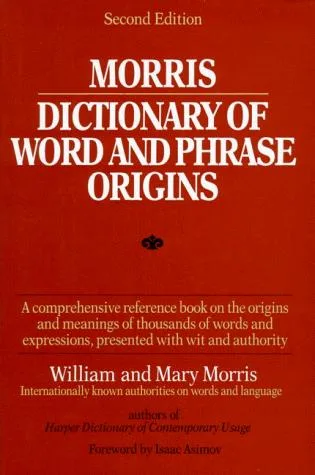
A rival claim belongs to Woodward’s Herald Tribune colleague Caswell Adams. As the story is told in William Morris’s Dictionary of Word and Phrase Origins, Adams was asked to compare Fordham’s formidable football team with those of Princeton and Columbia and waved the latter away as merely ‘Ivy League’, a coinage Woodward then picked up. Adams himself recalled inventing the phrase ‘in the mid-thirties’, but only vaguely, and no printed use of it by him has been found before the 1935 citation. His claim is best regarded as unproven.
One origin story can be dismissed outright: the notion that the name began as the ‘IV League’, a Roman-numeral four referring to an early four-college sporting compact. It is a tidy tale, but no example of ‘IV League’ has ever been found in print, and the group has always numbered eight, not four. It is a folk etymology that grew up after the fact.
The name outran reality for two decades, since sportswriters were using it long before any formal league existed. The eight university presidents signed the Ivy Group Agreement covering football in 1945, and only in 1954 did they extend it to all sports, creating the Ivy League as an actual athletic conference - a good twenty years after the newspapers had invented it.