To call someone a card is to say they are a character: amusing, a little eccentric, quick with a wisecrack and hard to disapprove of for long. ‘You’re a card’ is usually delivered with a laugh, often as mock reproach after a joke or a piece of cheek. It has a distinctly old-fashioned ring now, the sort of thing a grandparent says, though it is still understood everywhere English is spoken.
What’s the origin of the phrase ‘you’re a card’?
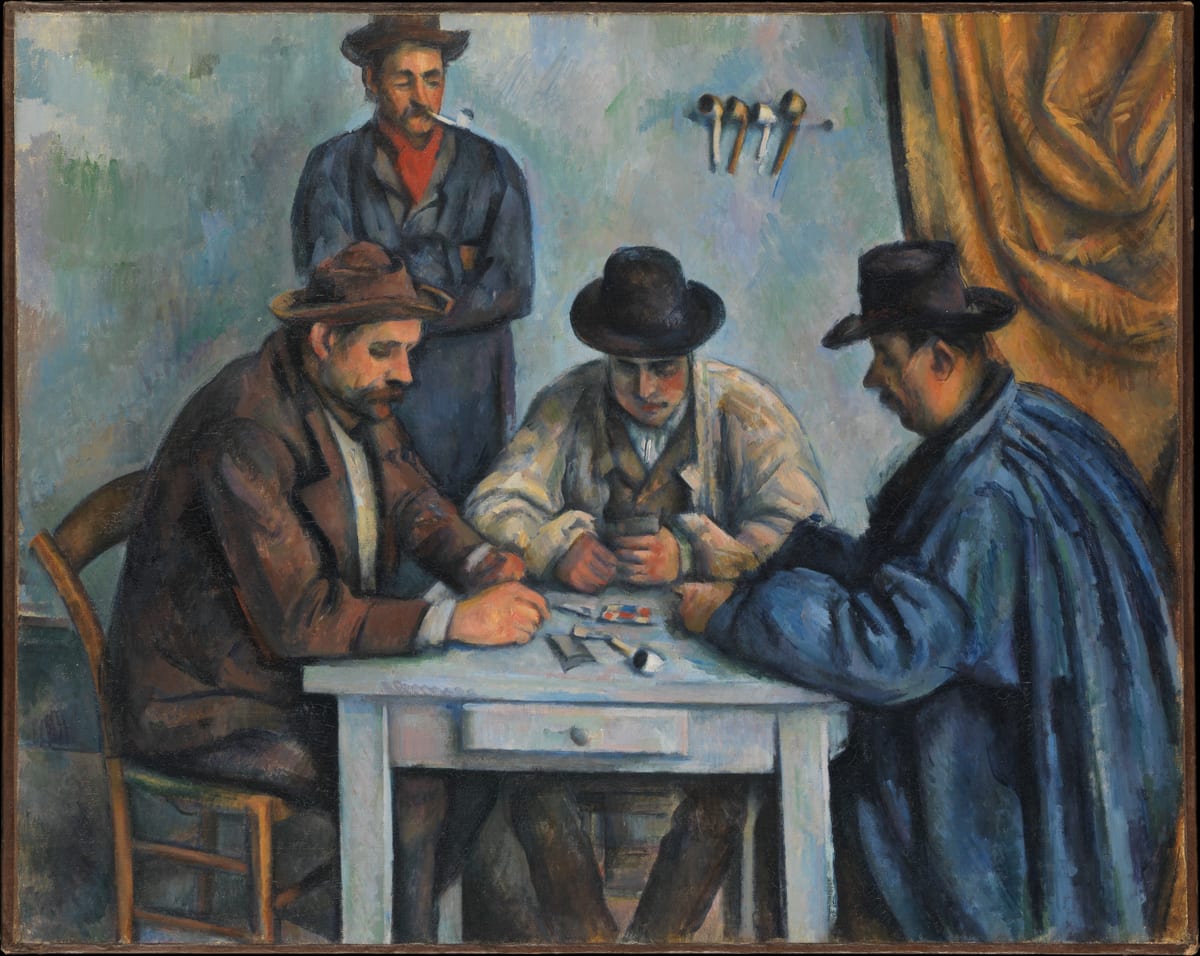
The compliment comes from the card table. From the sixteenth century a ‘sure card’ was a scheme, or a person, that could be relied on to win the game for you, and English went on to build a small family of expressions in which somebody was a card of one sort or another, with an adjective doing the descriptive work: a good card, a sure card, a knowing card, an old card. Green’s Dictionary of Slang turns up an isolated seventeenth-century example of a person as a ‘doubty good Card’ (1654), but the run of evidence really begins in the nineteenth century.
Dickens is where the record picks up. In a sketch first printed in Bell’s Life in London in 1835 and collected in Sketches by Boz as ‘Making a Night of It’, we meet “Mr. Thomas Potter, whose great aim it was to be considered as a ‘knowing card,’ a ‘fast-goer,’ and so forth”. Dickens put the quotation marks in himself, which tells us the label was already current slang rather than his own invention.
By Bleak House (1852-53) the adjective had become optional. The miserly rag-and-bottle dealer Krook is “such an old card as this, so deep, so sly, and secret”, and Inspector Bucket later reminds Grandfather Smallweed that “you know what a card Krook was for buying all manner of old pieces of furniter”. That bare use of card, for a shrewd or audacious character, is the earliest the Oxford English Dictionary has found.
Over the following half century the sense softened from ‘sharp operator’ to ‘entertaining oddity’, and its high-water mark is Arnold Bennett’s 1911 novel The Card, whose hero Denry Machin charms and blags his way from washerwoman’s son to mayor of Bursley. “What a card!” says one admiring councillor near the close. “He’s a rare ‘un, no mistake.” Asked what great cause Denry has ever been identified with, another supplies the novel’s famous last line: “He’s identified with the great cause of cheering us all up.” That is still exactly what the phrase means. The 1952 film version, with Alec Guinness as Denry, helped keep it in circulation, though it has faded since. The card table gave English plenty of similar figures, among them ‘turn up trumps’.