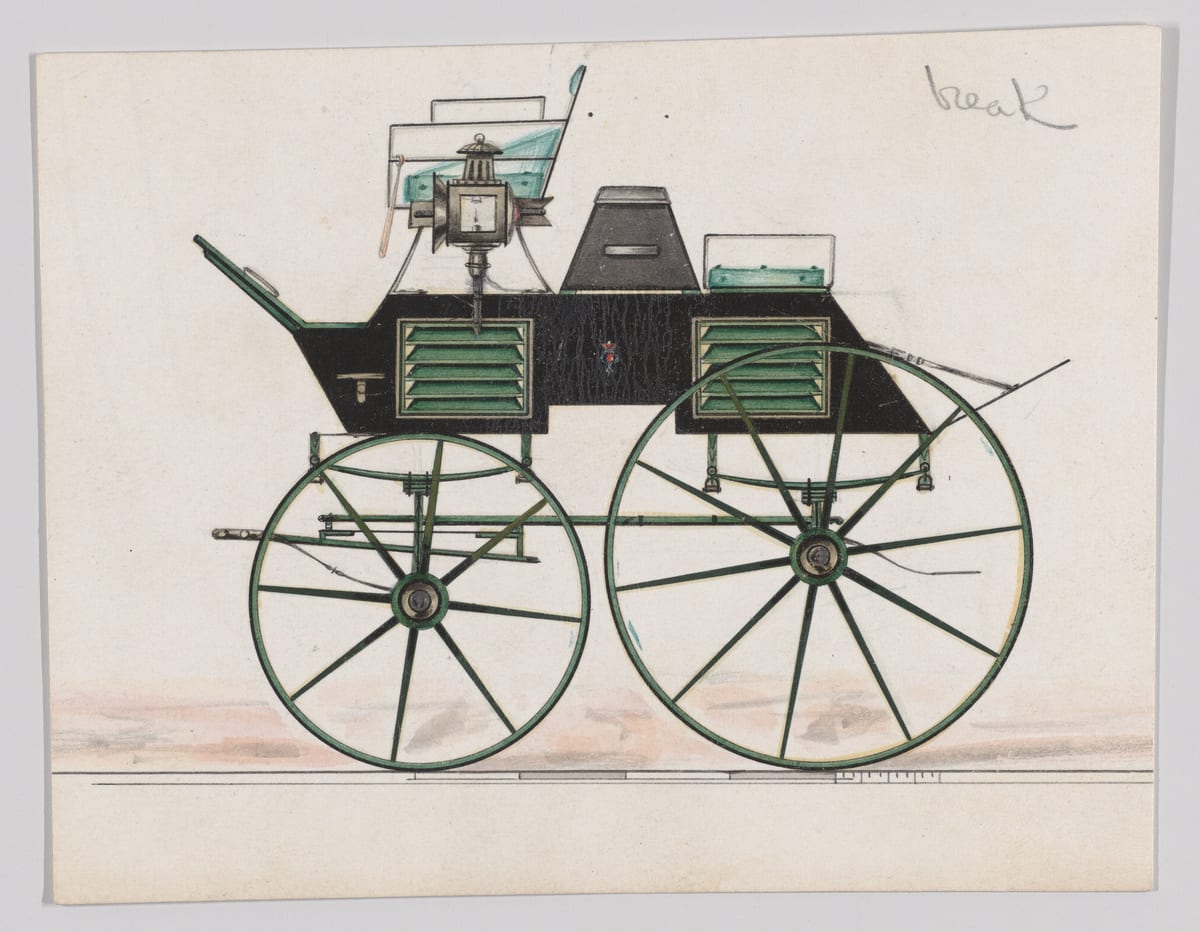
The image behind this phrase is a simple mechanical one: on a cart or wagon, the wheel that squeaks is the one an owner hears, so it is the one that gets the grease. Applied to people, it means that the person who complains loudest, or asks most insistently, tends to be the one whose problem gets dealt with. It is usually said with a shrug rather than approval. Sometimes it is practical advice to speak up if you want to be helped, and sometimes it is a wry comment on the fact that the quiet and uncomplaining often get overlooked while the noisy get attention.
What’s the origin of the phrase ‘the squeaky wheel gets the grease’?
The proverb is American and settled into its familiar shape in the early twentieth century, though the underlying picture is much older. In 1737 Benjamin Franklin printed a related saying in Poor Richard’s Almanack: “The worst wheel of the cart makes the most noise.” The specific pairing of a squeaking wheel with grease appears earlier still, in a very different setting: in a 1796 debate recorded in The Parliamentary Register, Richard Brinsley Sheridan spoke of “this oil of influence” being sent “to grease that squeaking wheel in the city, called the mercantile interest.”
The modern verse form is most reliably traced to Cal Stewart, the American entertainer known for his “Uncle Josh” rustic monologues. His 1903 collection Uncle Josh Weathersby’s “Punkin’ Centre” Stories carries the epigraph: “I don’t believe in kickin’, / It aint apt to bring one peace; / But the wheel what squeaks the loudest / is the one what gets the grease.” Here “kickin’” is period slang for complaining. Close variants circulated in print soon after, including one in the Wall Street Journal in 1910 and another that Ring Lardner ran in the Chicago Tribune in 1913, which he pointedly labelled “ANON.”
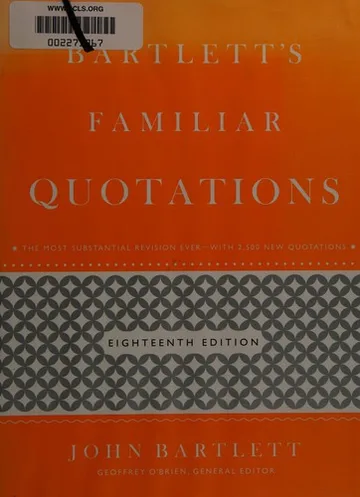
The phrase is very commonly credited to the humorist Josh Billings, the pen name of Henry Wheeler Shaw, and specifically to a poem called “The Kicker” said to date from around 1870. That attribution should be treated with caution. The poem has been printed under various names and as anonymous, its earliest known appearance is only 1910, and its provenance has never been verified. The Billings credit seems to owe much to Bartlett’s Familiar Quotations, which attributed the lines to Shaw in its 1937 edition without giving any supporting evidence. It is also easy to see how confusion arose, since Cal Stewart’s fictional narrator was named Josh Weathersby. On the current evidence the earliest firmly datable printing is Stewart’s 1903 epigraph, and the popular Josh Billings origin is best described as unproven. As worldly advice it pairs neatly with ‘the early bird catches the worm’: one rewards promptness, the other persistence.