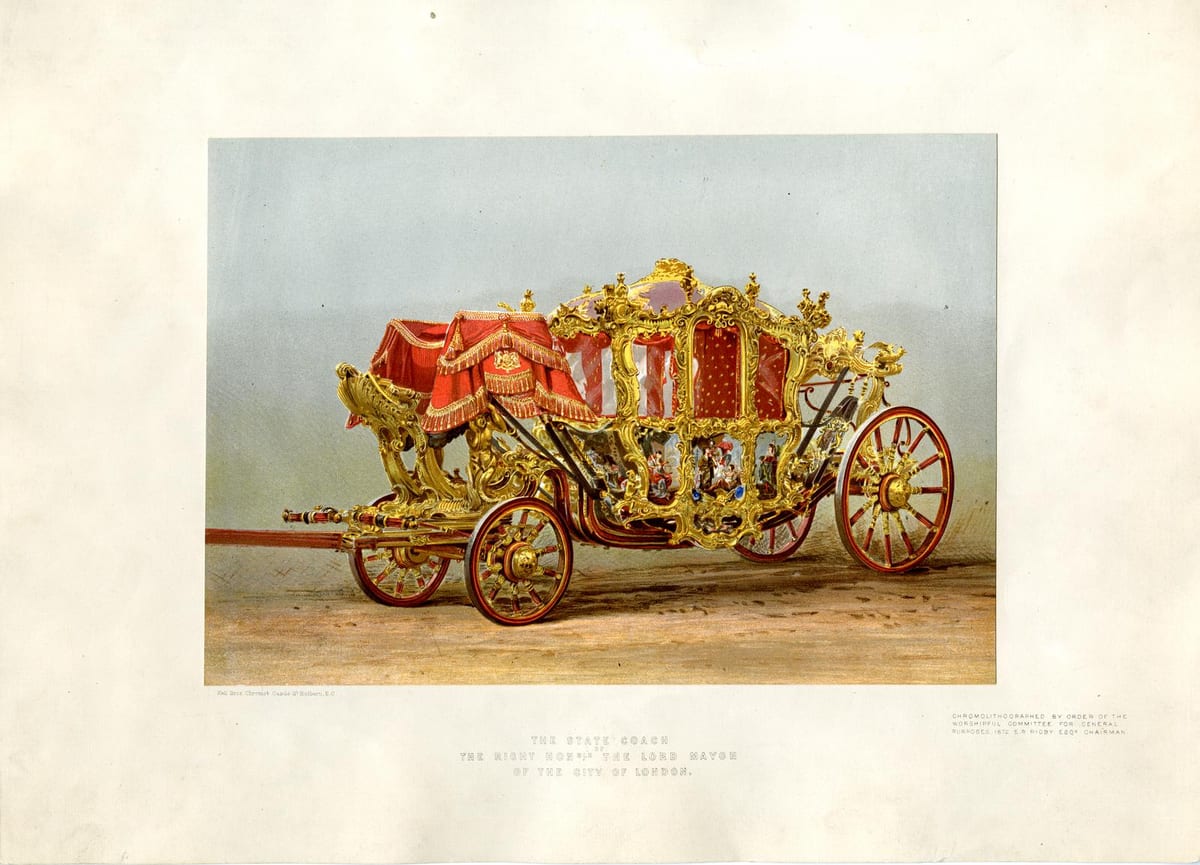
To “pimp out” something is to customise it in a deliberately flashy way. A “pimped-out car” has the chrome wheels, the sound system and the neon under-lighting; a “pimped-out office chair” is an ordinary one made ostentatiously fancy. The phrase is informal and usually jokey, and it peaked in everyday speech in the mid-2000s. It has a second, darker use: to “pimp out” a person (or a talent, or a principle) is to hire them out or exploit them for your own benefit, a sense that stays much closer to the word’s origins and is generally meant as an accusation.
What’s the origin of the phrase ‘pimp out’?
The noun “pimp” has been in English since about 1600. Its origin is unknown; the etymologist Douglas Harper’s Etymonline suggests a possible source in the French pimpant, meaning “alluring in dress, seductive”, which would make the word’s later association with showy appearance oddly fitting. The verb, meaning to act as a procurer, followed in the 1630s. Green’s Dictionary of Slang’s early evidence includes Samuel Pepys, who wrote in his diary in January 1668 of a courtier who “doth pimp to her for the King”.
The flattering senses grew out of twentieth-century Black American slang, where the pimp was a byword for conspicuous dressing. Green’s Dictionary of Slang records “pimp” used as an adjective meaning stylish or expensive by 1964, in a street rhyme collected by the folklorist Roger Abrahams: “Lived a little pimp monkey, you could tell by the clothes he wore.” From dress the idea spread to possessions, above all cars. By 1985 an American slang glossary cited in Green’s was defining a “pimped out” vehicle as one “worked over, polished up, and cherried out in excellent condition”.
What carried the phrase from street slang to office small talk was television. MTV’s makeover show Pimp My Ride, presented by the rapper Xzibit, first aired on 4th March 2004 and ran until 2007, taking battered cars and returning them absurdly customised. Spin-offs followed around the world, including a British version fronted by Tim Westwood. The formula made “pimp my…” a snowclone attached to almost anything, and by the late 2000s people were pimping out their CVs, their kitchens and their web pages. The American Heritage Dictionary now lists the transitive verb plainly: “to customize or adorn, often garishly”.
The exploitative sense needed no such journey, being a straightforward figurative stretch of the original meaning. Green’s Dictionary of Slang records “pimp” in US Black slang from the early 1970s for playing on people to get money out of them, and “pimp out” is the phrasal form: to say a celebrity “pimps out” their children for publicity is to accuse them of trading someone else’s dignity for their own gain. The two live senses therefore split neatly, one borrowing the pimp’s wardrobe and the other his business model. Because the word never lost its literal meaning, both uses strike some ears as crass, and the customising sense has faded from fashion since its Pimp My Ride heyday. For over-adornment that fails to convince, English already had mutton dressed as lamb.