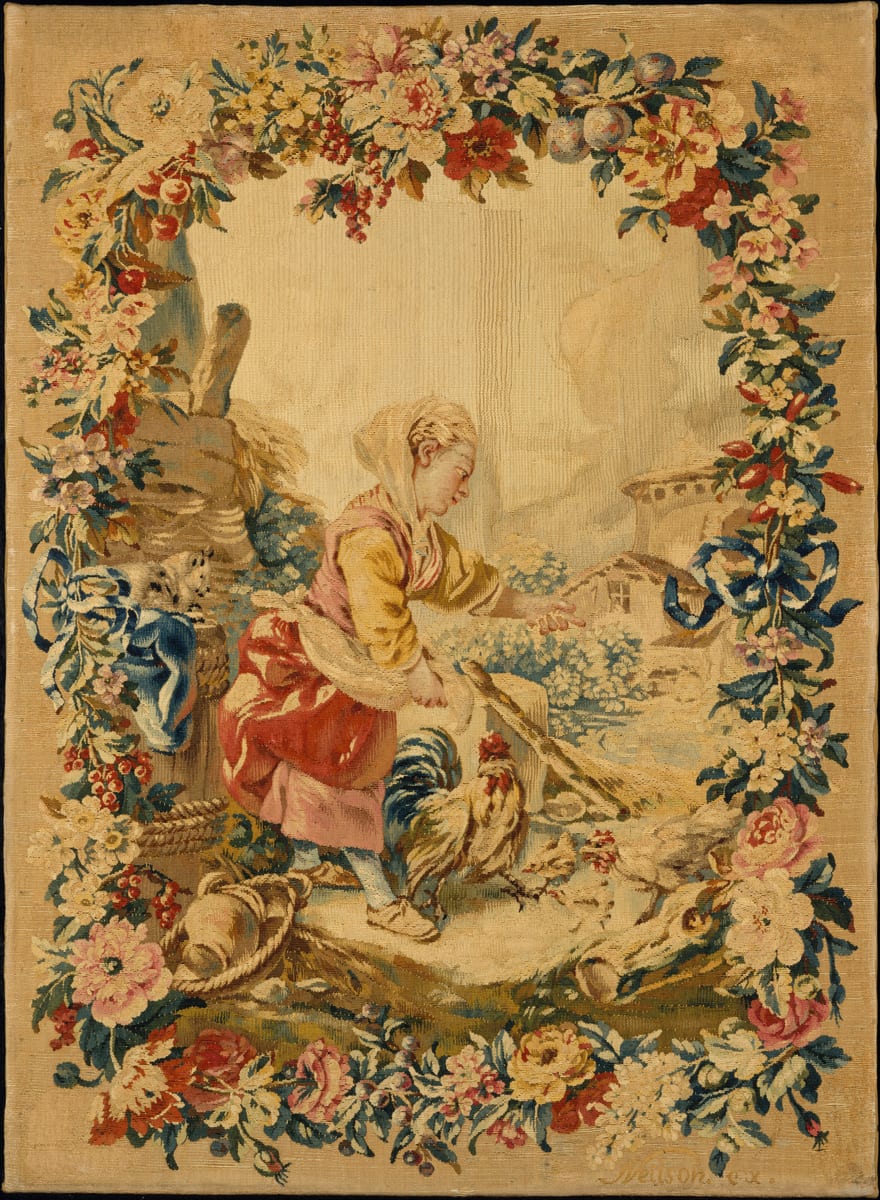
Chicken feed is a dismissive term for a paltry sum of money: wages, winnings or profits so small they are barely worth having. Call a payment chicken feed and you are saying it is beneath serious notice, the way a farmer thinks nothing of the grain scattered for the hens. The phrase has since stretched to cover anything of trifling value, and it leads a second life in espionage jargon, where it means low-grade intelligence deliberately fed to the other side.
What’s the origin of the phrase ‘chicken feed’?
The literal sense came first. Chicken feed is the cheap grain thrown to poultry, and the metaphor works in two directions at once: small coins look like scattered kernels, and the sums involved are as trifling as what the hens get. The figurative use is American, born in the gambling world of the early nineteenth century as small change, the petty stakes a serious player would sniff at.
The earliest known appearance in print is in Col. Crockett’s Exploits and Adventures in Texas, published in 1836, the year Davy Crockett died at the Alamo. The book came out under Crockett’s name but is generally attributed to the Philadelphia writer Richard Penn Smith, who worked it up from other sources after Crockett’s death. In it, ‘Crockett’ watches a thimblerig sharper fleecing his fellow passengers on a Mississippi steamboat, and reflects:
“I stood looking on, seeing him pick up the chicken feed from the green horns, and thought if men are such darned fools as to be cheated out of their hard earnings by a fellow who had just brains enough to pass a pea from one thimble to another…”
Whoever wrote that sentence expected readers of 1836 to understand chicken feed without explanation; the expression was evidently already established in American speech. Green’s Dictionary of Slang takes this passage as its first citation for the ‘small change’ sense.
During the twentieth century the phrase loosened its grip on coinage and came to dismiss small amounts of almost anything, in much the same register as calling something a dime a dozen. In the United States it even did a stint meaning plain nonsense, recorded in print by the 1930s.
The espionage sense grew from the same idea. In intelligence work, chicken feed (often written as one word) is genuine but essentially harmless information passed to an enemy service, usually through a double agent, so that the opposition comes to trust the source. The International Spy Museum’s glossary defines it as genuine but not seriously damaging intelligence knowingly provided to establish an agent’s bona fides. The trick is the one the riverboat sharper knew: throw out something of little real value and wait for the birds to peck.