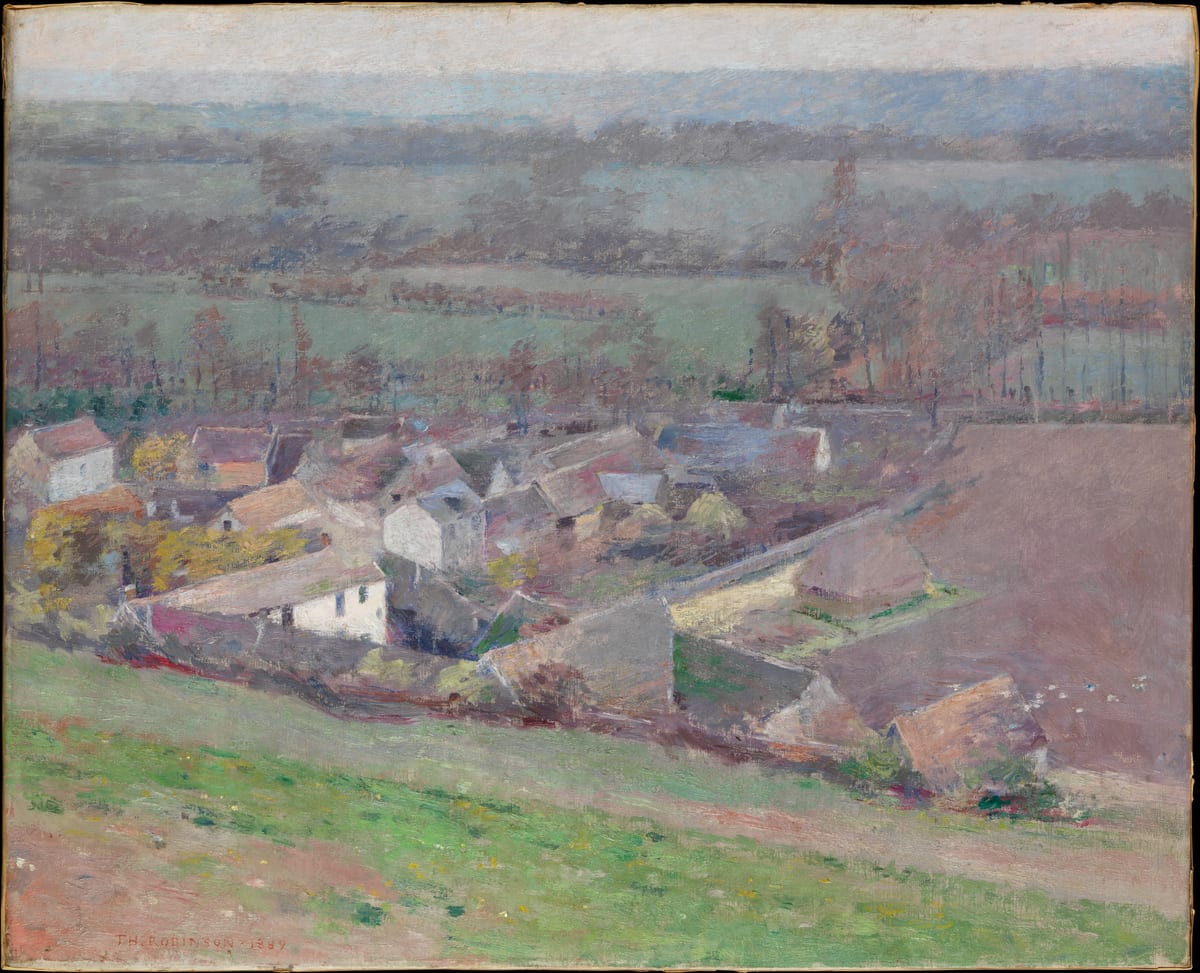
A bird’s-eye view is a view of something from directly above, the kind of prospect a bird would have while flying over the ground below. It is used literally of maps, aerial photographs and high vantage points, where a town, a valley or a building site can be taken in whole from the air rather than piece by piece from ground level. It is used just as often in a figurative sense, for a general summary of a subject that covers the whole of it without getting drawn into detail: a bird’s-eye view of a company’s history, of a country’s politics, or of how a plan fits together.
What’s the origin of the phrase ‘a bird’s-eye view’?
A bird in flight sees the landscape spread out beneath it, whole and simplified, in a way no one standing on the ground ever could. Etymonline dates the phrase’s first attestation to 1762, describing it as “the view as seen from above, as if by a bird in flight.”
Twenty years later it was ordinary enough for art writing. Horace Walpole’s Anecdotes of Painting in England (1782) praises a Rubens landscape that “exhibits an almost birds-eye view of an extensive country,” and calls the picture “a school for painters of landscape” in itself. Walpole uses the phrase in passing, as something his readers would already know, which is how a figure of speech looks once it has settled in.
Once the phrase had become familiar, it produced a deliberate opposite. Worm’s-eye view, meaning a view from below or from a humble, unglamorous position, was coined in the United States in 1898, specifically modelled on the already-established bird’s-eye view as its antonym. The two together give a neat pair of images, one looking down from a height and one looking up from ground level.