Scot free means escaping without punishment, or without paying what you owe. The scot was a medieval tax, and the phrase has nothing to do with Scotland or with Dred Scott. It has been in English since the Old English period. The standard spellings are scot free and scot-free; Scott free is a misspelling, and scotch free is an old variant that has long since dropped out of standard use.
What’s the origin of the phrase ‘Scot free’?
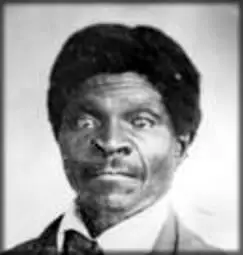
Dred Scott was a black slave born in Virginia, USA in 1799. In several celebrated court cases, right up to the USA Supreme Court in 1857, he attempted to gain his freedom. These cases all failed but Scott was later made a free man by his so-called owners, the Blow family. Knowing this, we might feel that we don’t need to look further for the origin of the phrase ‘scot free’. Many people, especially in the USA, are convinced that the phrase originated with the story of Dred Scott.
The etymology of this phrase shows the danger of trying to prove a case on circumstantial evidence alone. In fact, the phrase has nothing to do with Mr. Scott.
Given the reputation of Scotsmen as being careful with their money we might look to Scotland for the origin of ‘scot free’. Wrong again, but at least we are in the right part of the world now. ‘Skat’ is a Scandinavian word for tax or payment and the word migrated to Britain and mutated into ‘scot’ as the name of a redistributive taxation, levied as early the 10th century as a form of municipal poor relief.
Etymonline’s entry for scot (n.) traces the word to Old Norse skot, a contribution, whose literal sense was a shooting or a thing shot. The name of the country is a separate word with a separate history: Etymonline’s entry for Scot takes it from Late Latin Scotti, recorded about 400, a name of uncertain origin. The two words only look alike, and no Scotsman has ever had anything to do with going scot free. It is one of the phrases people most often get wrong.
The same Etymonline entry records that from about 1300 a scot was also the payment for food or drink at a social gathering. Paying your scot meant settling your share of the reckoning, so going scot free was, at its most literal, walking out without settling it.
‘Scot’ as a term for tax has been used since then in various forms - Church scot, Rome scot, Soul scot and so on. Whatever the tax, the phrase ‘getting off scot free’ simply refers to not paying one’s taxes.
No one likes paying tax and people have been getting off scot free since at least the 11th century. The first reference in print to ‘scot free’ is in a forged copy of the Writ of Edward the Confessor. We don’t have a precise date for the forged version of the writ but Edward died in 1066 and the copy was made sometime in the 13th century. Either way it was a long time before Dred Scott got his freedom.
The compound is at least as old as the writ it was forged into. Etymonline dates scot-free to late Old English, in the form scotfreo, glossed as exempt from royal tax and built from scot, a royal tax, plus freo, free. The word entered English as a piece of tax vocabulary, and only later became a way of describing an escape from anything at all.
The use of the figurative version of the phrase, that is, one where no actual scot tax was paid but in which someone escapes custody, began in the 16th century, as in this example from John Maplet’s natural history Green Forest, 1567:
“Daniell scaped scotchfree by Gods prouidence.”
The 1567 first edition has been scanned by the Internet Archive and the scotchfree spelling is there in Maplet’s text. The form people still type into a search box today was genuinely in print in the 16th century, although it stopped being standard English long ago.
‘Scotchfree’ was a variant based on a mishearing. An example of the currently used form, that is, ‘scot free’, comes a few years later, in the English author Robert Greene’s The Historie of Dorastus and Fawnia, 1588:
These and the like considerations something daunted Pandosto his courage, so that hee was content rather to put up a manifest injurie with peace, then hunt after revenge, dishonor and losse; determining since Egistus had escaped scot-free.
Greene’s romance, better known as Pandosto, is the story Shakespeare later reworked as The Winter’s Tale. The sense there is already the modern one. No tax is at stake in the passage; Egistus has simply got away with it, and Pandosto resents that he has.
So, the first people to go scot free weren’t from the 19th century but the 16th, and not American or Scottish, but English.
Cambridge Dictionary gives the modern adverb as ‘without receiving the deserved or expected punishment or without being harmed’. The tax it was named for has been gone for centuries, but the exemption survives, applied to anyone let off the hook when a penalty was expected.