Someone who is “sweating cobs” is sweating a great deal: dripping, wringing wet, well past glowing. The phrase is British, informal and firmly regional. Its heartland is the Midlands and the north of England, from Nottingham and the Black Country up through Lancashire, where it remains an everyday way of complaining about hot weather, hard work or a nervous wait (“I was sweating cobs before the interview”). It lives in the spoken language of kitchens, building sites and packed buses rather than on the page, which is one reason its history is so thinly documented.
What’s the origin of the phrase ‘sweating cobs’?
The phrase is genuine dialect with a short paper trail. Green’s Dictionary of Slang defines “sweat cobs” as “to perspire very heavily”, and the written record it assembles is strikingly recent: the 1984 edition of Eric Partridge’s Dictionary of Slang and Unconventional English dates the expression from the mid-twentieth century, and the earliest quotation in Green’s, from a 1980 play about the navy, Submariners, is in fact for a services variant, “I’m sweating neaters”. Expressions like this can live in speech for generations before anyone writes them down, so it may well be older; nobody, though, has yet produced a Victorian citation.
The real argument is over which “cob” is being sweated, because cob is one of the most overloaded little words in English. Etymonline notes that its many senses cluster around the ideas of “heap, lump, rounded object” and “head”, and that the first edition of the Oxford English Dictionary sorted the word into eight separate nouns, a count the second edition raised to eleven. Current dictionaries still list, among other things, a male swan, a stocky short-legged horse, a hazelnut, a corncob, a clay-and-straw building material, a round loaf and “a small rounded lump or heap of coal”. Joseph Wright’s English Dialect Dictionary, compiled at the end of the nineteenth century, adds a column of local cobs of its own, from a small stack of corn in Oxfordshire to the stone of a cherry in Lincolnshire and a blow on the head, “a cob o’ the yead”, in Leicestershire.
Lexicographers favour the plainest of those senses. Green’s derives the phrase from cob as “a rounded lump”: to sweat cobs is to sweat in great rounded drops, lumps of sweat, the same comic exaggeration that produces “sweating buckets”. That reading needs no story behind it, which is usually a good sign in etymology.
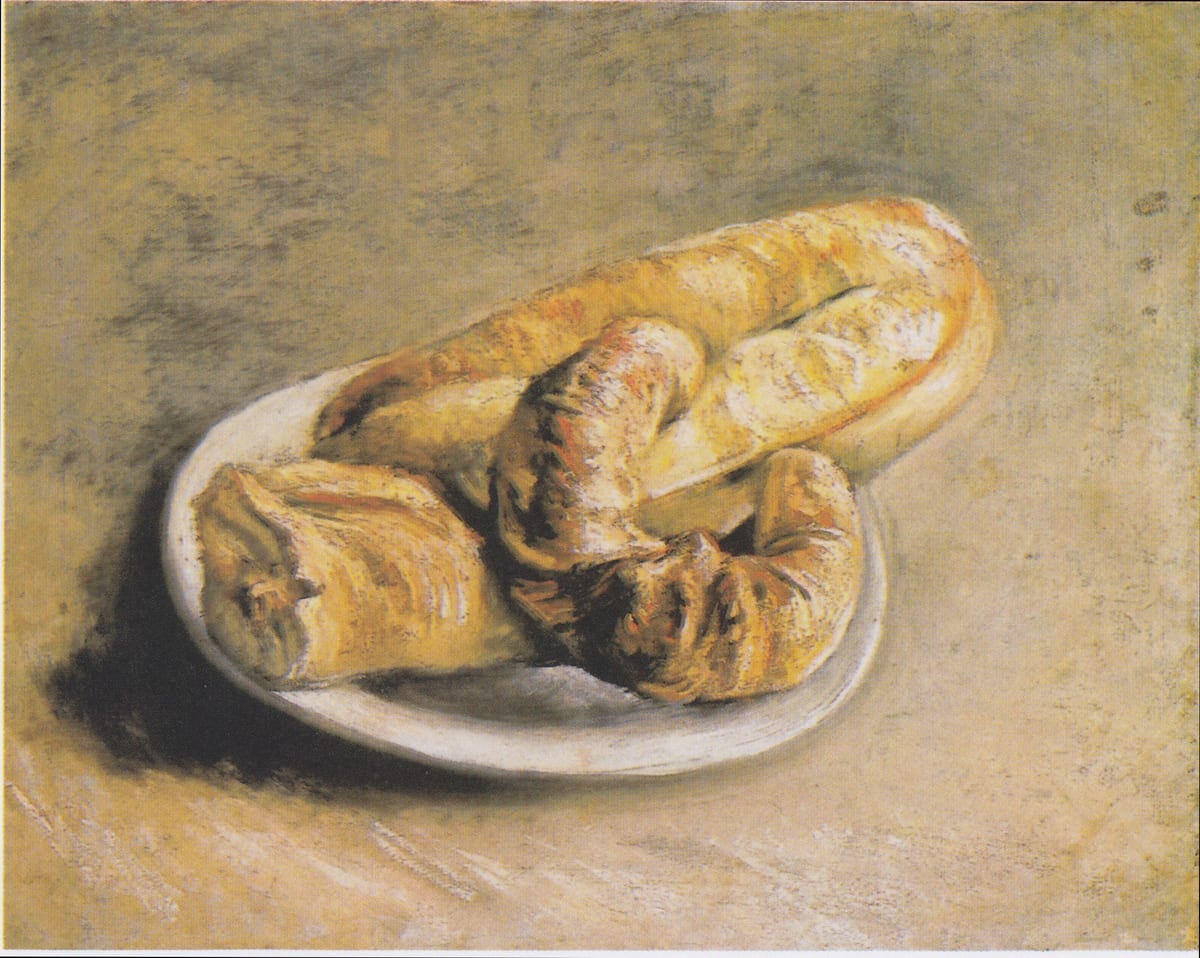
The most popular folk explanation reaches for bread instead. In exactly the places where the phrase is most at home, a cob is a bread roll: when YouGov asked nearly 25,000 English people in 2018 what they called one, “cob” was the majority answer in Leicestershire, Nottinghamshire and Derbyshire. Freshly baked cobs bead with moisture as they cool, and the bakers who pull them from the oven sweat freely too, so the story tells itself. There is no documentary evidence for it beyond that overlap of geography, but the overlap is real: the phrase and the bread roll share a heartland.
A third suggestion points to the horse. A cob is a thickset little workhorse, the sort that lathers up under a day’s labour, and on this theory “sweating cobs” is a squashed-down “sweating like a cob”. The grammar counts against it: in the phrase, the cobs are plural and are what is being sweated, not what is doing the sweating.
Whichever cob it is, the word was demonstrably productive in twentieth-century northern and Midland slang. Its best-known relative is “to have a cob on”, meaning to be in a bad temper, which Green’s Dictionary of Slang traces in print to ships’ stewards’ slang recorded by Partridge in 1937, with a 1943 example, “he seems to have a proper cob on this morning”. Unless an earlier citation surfaces, the honest summary is this: “sweating cobs” is a twentieth-century regional expression, its exact parentage is disputed, and the rounded lump is the least strained of the explanations on offer. English keeps a whole wardrobe of sweat idioms, up to and including blood, sweat and tears; this is the one you need a local guide for.