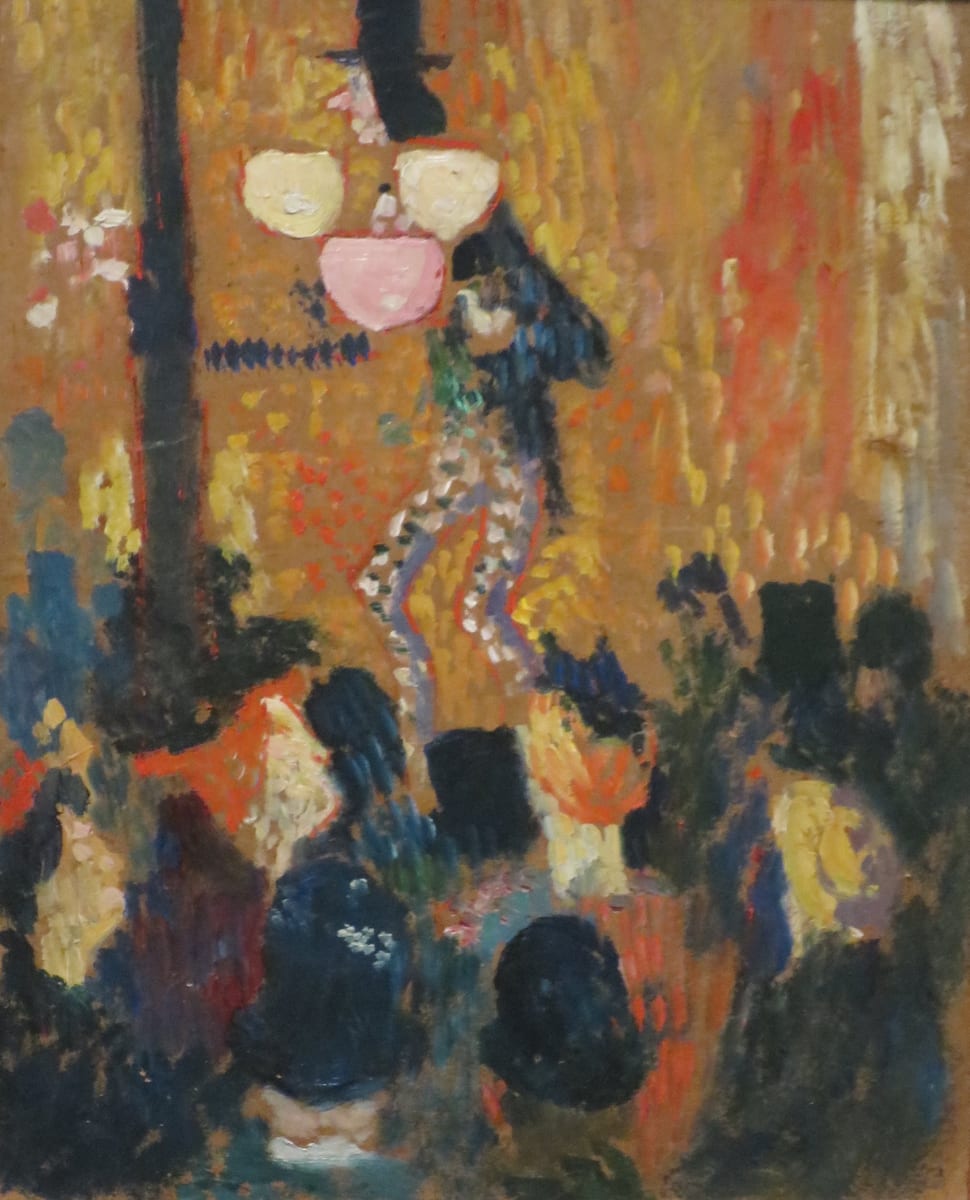
Helter-skelter means in disorderly haste: headlong and confused. It is a rhyming reduplication that was already in use in the 1590s, so the word came long before the fairground slide and the Beatles song that took its name. Neither half of the pair means anything on its own.
What’s the origin of the phrase ‘Helter-skelter’?
Those of a certain age might remember The Beatles’ song from the 1968 White Album - Helter Skelter. If so, the song’s lyrics may also evoke memories of clinging on to hessian mats and spiralling down fairground slides.
Helter-Skelter slides began appearing at British fairs around the turn of the 20th century. In 1906, the UK newspaper The Westmorland Gazette included this:
“The World’s Manufacturing Company, examples of whose ‘helter-skelter’ lighthouses are at Earl’s Court, Blackpool, Southport, and other places.”
(Note - apropos of nothing in particular: ‘The World’s Manufacturing Company’ - it’s been some years since a British company had the confidence to call itself something like that.)
Does the phrase helter-skelter derive from the slides’ name? No, it’s the other way about - the phrase came first. So, beyond the fairground, what is helter-skelter?
The term long pre-dates the fairground ride and has been used to mean disorderly haste or confusion since at least the 16th century. Thomas Nashe used it that way in his ‘Four letters confuted’, 1592:
“Helter skelter, feare no colours, course him, trounce him.”
(‘To confute’ is, or rather was, as it has been used only rarely since the 17th century, ‘to render futile’, ‘to prove an argument to be false’.)
Nashe’s pamphlet was published as Strange Newes, Of the intercepting certaine Letters and carries The Foure Letters Confuted as its running title, which is why it is cited under both names. The passage is reprinted in R. B. McKerrow’s edition of the Works of Thomas Nashe, 1904. Etymonline puts the word’s first appearance in the 1590s and calls it perhaps a rhyming reduplication of the old verb skelte, ‘to hasten, scatter hurriedly’.
Shakespeare, always ready to appropriate colourful new language, used the term a few years later in Henry IV, Part. 2, 1600 :
Helter skelter, haue I rode to thee, and tidings do I bring.
In the Folger Shakespeare Library’s text of the play the words belong to Pistol, in Act 5, scene 3. The word is doing there what it does in Nashe: describing the manner of an action rather than naming a thing. That adverb was all it was for a long while. Etymonline dates the adjective, the one in a helter-skelter rush or a helter-skelter dash for the door, to 1785.
Helter-skelter has been in common use in England for the past 400 years and has been known in the USA since the 1820s.
Both strands are still current. The Cambridge Dictionary defines the adverb as ‘quickly and in all directions’, and gives a separate British noun for the fairground ride: ‘a tall structure at a fair that you slide down and around for enjoyment’.
Neither helter nor skelter had any meaning in themselves. Like many word pairs of this sort (called rhyming reduplications), they only exist as part of the pair - although skelter was used alone later, but only as a shortened form of helter-skelter.
The Century Dictionary, quoted by Etymonline, puts it more bluntly still: the word is ‘a riming formula vaguely imitative of hurry and confusion’, a jingle rather than a compound of two parts. An older account did try to give the halves work to do. Francis Grose split the word into helter, to hang, and kelter, order, so that the whole meant ‘hang order, or in defiance of order’. Edward Moor quoted that derivation in his Suffolk Words and Phrases, 1823, and turned it down flat: ‘I cannot accord in this derivation.’
Another reduplication with a similar meaning is pell-mell (a confused throng or, in disordered haste). This originated around the same time - the first recorded use dates from 1579. Others which came later, but which are in shouting distance in terms of meaning, are harum-scarum (reckless rowdiness) and hurly-burly (commotion and confusion).
Pell-mell is the odd one out of that group. Etymonline traces it to Old French pesle mesle of the 12th century, which makes it a borrowing rather than something built in English out of English pieces.
The expression ‘Helter-skelter’ had something of a renaissance in the late 1960s when the American Charles Manson, the leader of the notorious Family cult, began using it as his name for the apocalyptic war between whites and blacks which he believed was soon to break out. Manson interpreted many of the lyrics in Beatles’ songs to suit his maniacal predictions. In particular, the reference to going up and down the helter-skelter slide in Helter Skelter he believed was a prediction of his Family’s appearance from the Bottomless Pit.
See other reduplicated phrases.