

To make smart and trim.
To make smart and trim.
Spruce-up is just a little phrase, and is nothing to do with sweeping with spruce brooms, as some have suggested. It has taken quite a journey to get to us in its present state. The state it started from was Prussia. The 14th century word spruce is a variant of Pruce, which was itself a shortened version of Prussia. Originally, things that were spruce were those items brought from Prussia; for example, spruce fir trees and, more to the point for this phrase, spruce leather.
From the end of the 16th century, spruce was used as a verb meaning ‘to make trim and neat’. In The terrors of the night, or, a discourse of apparitions, 1594, Thomas Nashe equates ‘sprucing’ with ‘cleaning’:
[You shall] spend a whole twelue month in spunging & sprucing.
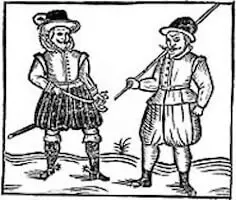
A jerkin made from the expensive imported spruce leather was the fashion accessory of choice for Tudor and Stuart noblemen. Robert Greene, in A Quip for an Upstart Courtier – a quaint dispute between Cloth-breeches and Velvet-breeches, 1592, paints a picture of the dandy of the day:
“A fellow briskly apparelled, in a blacke taffata doublet, and a spruce leather jerkin with christall buttons.”
‘Spruce’ moved from being an adjective, describing leather and other goods from Prussia, to a verb, meaning ‘make smart and neat’.
The first mention of ‘sprucing-up’ comes in Sir George Etherege’s Restoration drama The Man of Mode, 1676:
“I took particular notice of one that is alwaies spruc’d up with a deal of dirty Sky-colur’d Ribband.”
In 20th century America, the term ‘spruce-up’ took on a new lease of life, with a slightly modified meaning. It began to be used there to mean ‘tidy-up; refurbish’ – a counterpart to the English ‘Spring-clean’. Up until then ‘sprucing-up’ had been reserved for people and their clothes.
Many of the early references to sprucing up refer to adding ribbons to clothing but it seems that, to really spruce yourself up, you need a (preferably German) leather jacket.
Trend of spruce – up in printed material over time
A B C D E F G H I J K L M N O P Q R S T UV W XYZ
American Animals Australian Bible Body Colour Conflict Death Devil Dogs Emotions Euphemism Family Fashion Food French Horses ‘Jack’ Luck Money Military Music Names Nature Nautical Numbers Politics Religion Shakespeare Stupidity Entertainment Weather Women Work
Have you spotted something that needs updated on this page? We review all feedback we receive to ensure that we provide the most accurate and up to date information on phrases.