What’s the origin of the phrase ‘Walk the plank’?
Walking the plank is as much a part of pirate folklore as eye-patches, peg-legs and squawking parrots, and the scene of hapless victims being prodded by cutlass-wielding pirates and ‘walking the plank’ to their certain death has often been used as a dramatic device in stories and films. It isn’t just a fiction; ‘walking the plank’ was really used as a form of impromptu execution in the 18th and 19th centuries.
Some reports date the phrase from 1769 when it is said that a seaman called George Wood confessed to a chaplain in Newgate Prison the he and his shipmates had forced others to ‘walk the plank. These reports derive from Douglas Botting’s authoritative book The Pirates, 1978. Whether this is a true report of an actual event is open to considerable doubt. Botting himself doesn’t set much store by it, describing the ‘alleged confession’ as ‘an obscure account … which may or may not be true, and in any case had nothing to do with pirates’.
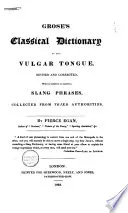
There are documentary records of the phrase’s use dating from the late 18th century. Grose’s Classical Dictionary of the Vulgar Tongue, 1788, defined the term:
WALKING THE PLANK. A mode of destroying devoted persons or officers in a mutiny on ship-board, by obliging them to walk on a plank laid over the ship’s side; by this means, as the mutineers suppose, avoiding the penalty of murder.
The following year, a summary of a committee of the UK House of Commons took evidence from a John Barnes, Esquire, who was Governor of Senegal from 1763 to 1766. They published the committee minutes under the title Abridgement of the Minutes of the Evidence, Taken Before a Committee of the Whole House, To Whom it was Referred to Consider of the Slave-Trade, 1789. The events that Barnes described took place in 1788:
The food, notwithftanding the mortality, was fo little, that if ten more days at fea, they fhould, as the captain and others faid, have made the flaves walk the plank, that is, throw themfelves overboard, or have eaten thofe flaves that died.
It isn’t surprising that the captain also reported that the slaves “fang fongs of forrow”.