

The heart of the matter; the basic essentials. The phrase is usually used in the extended form ‘get down to the nitty-gritty’.
The heart of the matter; the basic essentials. The phrase is usually used in the extended form ‘get down to the nitty-gritty’.
Any turn of phrase that is suspected as being racist is subject to close scrutiny, especially in the USA; hence the euphemistic ‘N-word’. Reports that a harmless word like picnic originated as the name of a lynching party only have to be voiced to be taken seriously and become part of folk-etymology.
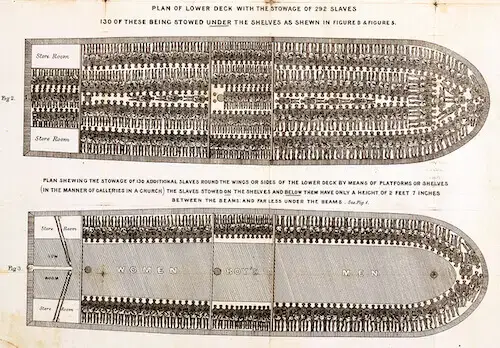
In that context it has been alleged that ‘nitty-gritty’ is a derogatory reference to the English slave trade of the 18th century.
The suggestion is that nitty-gritty originated as a term for the unimportant debris left at the bottom of ships after the slaves had been removed and that the meaning was extended to include the slaves themselves.
This view may have been passed around for some years in the late 20th century. The first printed source of it that I know of is from the London newspaper the Evening Standard, May 2002:
Slang expressions such as “nitty gritty” are increasingly being banned by Britain’s police forces because of their racist overtones, it was claimed today. Home Office minister John Denham received a ticking off [for using the phrase] from police officers during the Police Federation’s annual conference. According to race relations and discipline officers at Scotland Yard, the phrase originates from the 18th century slave trade and refers to the detritus left behind in the hold of slave ships.
Nitty-gritty is usually used with the prefix ‘getting down to’ and there is a sense that, whatever the nitty-gritty is, it is at the bottom of something. Whoever came up with the ‘detritus left in slave ships’ idea made a plausible guess based on the nature of slave ships, but they guessed wrong.
There is no evidence of any sort to support the suggestion that the phrase ‘nitty-gritty’ had any connection with slave ships. It originated in the USA as an African-American expression, but that’s as near as it gets to slavery. It isn’t recorded in print until the 1930s, long after slave ships had disappeared, and none of the early references make any link to slavery.
The first reference that I can find of the phrase in print is from the New York Catalog of Copyright Entries, Part 3 – Musical Compositions, 1937. That lists a song titled ‘That Nitty Gritty Dance‘ which was copyrighted by Arthur Harrington Gibbs.
The phrase isn’t found in print very often in the next 20 years, although one newspaper story from The Pittsburgh Courier, June 1940, does use the expression with the same ‘essential elements’ meaning that we use today.
Any convention goes lacking when that Joe Louis clenches his fists, put on the gloves, and steps into the ring in his pretty satin trunks and whips another guy down in the ‘nitty-gritty’.
It has also been suggested, again without any evidence, that ‘nitty-gritty’ refers to head lice, a.k.a. ‘nits’, or that it refers to ground corn, a.k.a. ‘grits’.
Where it does come from isn’t known. It is one of the many phrases that use rhyming reduplication, for example, namby-pamby, willy-nilly etc. It is most likely that the rhyme was formed as a simple extension of the existing US adjective ‘gritty’, meaning determined or plucky.
See other reduplicated phrases.
See other phrases that were coined in the USA.
Trend of nitty – gritty in printed material over time
A B C D E F G H I J K L M N O P Q R S T UV W XYZ
American Animals Australian Bible Body Colour Conflict Death Devil Dogs Emotions Euphemism Family Fashion Food French Horses ‘Jack’ Luck Money Military Music Names Nature Nautical Numbers Politics Religion Shakespeare Stupidity Entertainment Weather Women Work
Have you spotted something that needs updated on this page? We review all feedback we receive to ensure that we provide the most accurate and up to date information on phrases.