What’s the origin of the phrase ‘Horse feathers’?
This term, which was originally the single word horsefeathers, but is now also widely written as two words, is of American origin and its use is largely restricted to the USA. Those of us from other parts of the world will know the term from the Marx Brothers’ 1932 film Horse Feathers, in which Professor Quincy Adams Wagstaff (Groucho Marx) is unwisely appointed as the president of Huxley College.
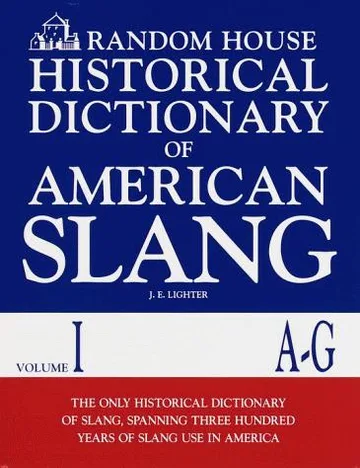
Horsefeathers, which is said by J. E. Lighter’s Historical Dictionary of American Slang to be a euphemism for horse-s***, is reported as being coined by the comic-strip artist and writer, William Morgan “Billy” de Beck. The authoritative journal ‘American Speech’ printed this in their December 1928 issue:
“Mr. William De Beck, the comic-strip comedian responsible for ‘Barney Google,’ assumes credit for the first actual use of the word horsefeathers”.
Billy de Beck was the author of the popular cartoon Barney Google, which frequently featured dialogues with a horse - his sidekick Spark Plug. He also created a short cartoon film called Horsefeathers, which appeared in US cinemas in 1928.
The term began life in the late 1920s. At that time the American etymologist Leonard Zwilling published an annotated dictionary of the work of the cartoonist T. A. Dorgan (a.k.a. TAD) - A TAD Lexicon. In part 46 of that work, published in 1927, we have the first citation of horsefeathers in print:
“The cashier’s department - Bah - Horsefeathers. He wouldn’t give you a ticket to see Halley’s Comet.”
Both Dorgan and de Beck used jocular language and are credited with new coinages; for example, gate-crasher (Dorgan) and heebie-jeebies (de Beck). Either could plausibly have coined horsefeathers. It seems likely to have been brought to the public via the popular media as it appears many times in print soon after 1927, which indicates a rapid and widespread take-up that isn’t common for phrases that spread by word of mouth.