Meaning

It's better to have loved and lost than never to have loved at all

Categorised in: A List Of 720 English Proverbs, With Their Meanings Explained

What's the meaning of the phrase 'It's better to have loved and lost than never to have loved at all'?

The proverbial saying 'It's better to have loved and lost than never to have loved at all' has a straightforward literal meaning. Even the pain of a lost love is worth bearing if one can first experience the joy of love.

It's better to have loved and lost than never to have loved at all
It's better to have loved and lost than never to have loved at all - caption

What’s the origin of the phrase ‘It’s better to have loved and lost than never to have loved at all’?

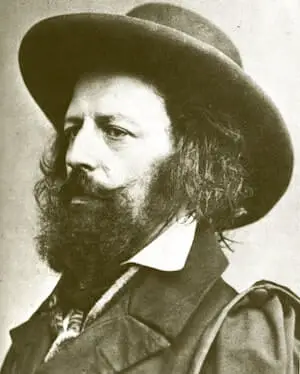
The line ‘It’s better to have loved and lost than never to have loved at all’ comes from Alfred Lord Tennyson’s poem In Memoriam:27, 1850:

I hold it true, whate’er befall;
I feel it, when I sorrow most;
‘Tis better to have loved and lost
Than never to have loved at all.

Alfred Lord Tennyson is now remembered as a rather dour old sage of the Victorian era. Nevertheless, he gave us two commonly used lines about love. As well as ‘It’s better to have loved and lost than never to have loved at all’ he also wrote of ‘a young man’s fancy’ in his 1842 poem Locksly Hall:

In the spring a livelier iris changes on the burnished dove;
In the spring a young man’s fancy lightly turns to thoughts of love.

Historical trend

“loved and lost than never” in printed material over time

Source: Google Books Ngrams (1800–2020).

180018201840186018801900192019401960198020002020
  • loved and lost than never